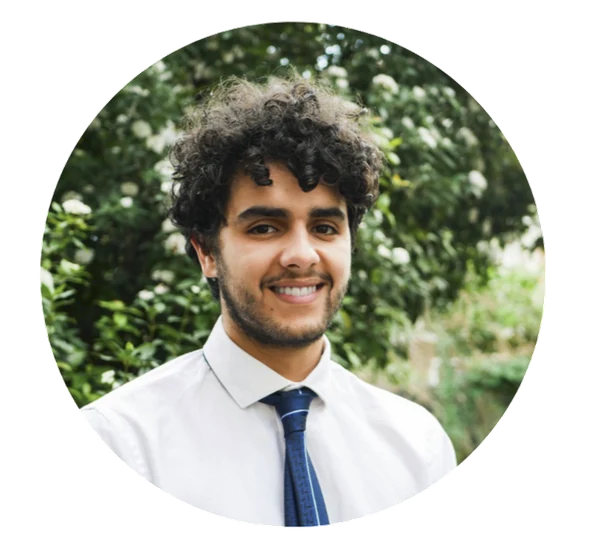
About
I’m a PhD candidate in Computer Science at the National University of Singapore. My research focuses on statistical machine learning, prediction under uncertainty, and robust decision-making. My work combines theory with experiments and has appeared at NeurIPS, ICML, ICLR, and AISTATS.
I expect to complete my PhD in January 2027 and am looking for full-time roles and internships in quantitative research or machine learning research. If you’re hiring or interested in working together, I’d be glad to hear from you—please email me.
Research
I study how to make the most of several models or experts—a question that connects learning-to-defer, model routing, and orchestration. Given an input $x$, the goal is to learn which model $f_i$ is best suited to handle it, subject to the task’s constraints. My work combines theory and algorithms to understand and improve this choice.
Applications range from language models and time-series forecasting to computer vision. More generally, the approach can be used wherever several models or experts are available to query.
Keywords: statistical machine learning, model routing, model orchestration, learning-to-defer, online learning, time series, large language models.
Publications
2026
- Beyond Augmented-Action Surrogates for Multi-Expert Learning-to-Defer. Yannis Montreuil, Axel Carlier, Lai Xing Ng, Wei Tsang Ooi. NeurIPS26. Link
- A Query Is Not a Commitment: Learning to Correct Expert Answers in Online Deferral. Yannis Montreuil, Axel Carlier, Lai Xing Ng, Wei Tsang Ooi. Preprint. Link
- Consistent Learning-to-Defer with Expert-Conditioned Advice. Yannis Montreuil, Leina Montreuil, Axel Carlier, Lai Xing Ng, Wei Tsang Ooi. Preprint. Link
- Learning to Defer in Non-Stationary Time Series via Switching State-Space Models. Yannis Montreuil*, Letian Yu*, Axel Carlier, Lai Xing Ng, Wei Tsang Ooi. Preprint. Link
- Why Ask One When You Can Ask k? Learning-to-Defer to the Top-k Experts. Yannis Montreuil, Axel Carlier, Lai Xing Ng, Wei Tsang Ooi. ICLR 2026. Link.
- Online Learning-to-Defer with Varying Experts. Yannis Montreuil*, Duy Dang Hoang*, Maxime Meyer*, Axel Carlier, Lai Xing Ng, Wei Tsang Ooi. AISTATS 2026. Link.
- Adversarial Robustness in One-Stage Learning-to-Defer. Yannis Montreuil*, Letian Yu*, Axel Carlier, Lai Xing Ng, Wei Tsang Ooi. AISTATS 2026. Link.
- Optimal Query Allocation in Extractive QA with LLMs: A Learning-to-Defer Framework with Theoretical Guarantees. Yannis Montreuil*, Yeo Shu Heng*, Axel Carlier, Lai Xing Ng, Wei Tsang Ooi. AISTATS 2026. Link.
- Towards Robust Human–AI Decision-Making via Learning-to-Defer. Yannis Montreuil. AAAI-26 Doctoral Consortium.
2025
- Adversarial Robustness in Two-Stage Learning-to-Defer: Algorithms and Guarantees. Yannis Montreuil, Axel Carlier, Lai Xing Ng, Wei Tsang Ooi. ICML 2025. Link.
- A Two-Stage Learning-to-Defer Approach for Multi-Task Learning. Yannis Montreuil*, Yeo Shu Heng*, Axel Carlier, Lai Xing Ng, Wei Tsang Ooi. ICML 2025. Link.
* indicates equal contribution. Abstracts and details are on the learning-to-defer publications page.